What Was the Tower of Babel Like?
The Tower of Babel was built on the plain of Shinar soon after Noah’s flood. The tower was constructed out of baked bricks which were most likely kiln-dried with fire, (Genesis 11:3). The builders’ purpose was to make a name for themselves by creating a city with a tower that would reach the heavens and to protect them from another flood.
Browse Article Contents
- What Does “Babel” Mean?
- Where Was the Tower of Babel Located?
- Who Built the Tower of Babel?
- What Was the Tower of Babel Made Of?
- What Did the Tower of Babel Look Like?
- When Was the Tower of Babel Built?
- How Was the Tower of Babel Destroyed?
- What Does the Tower of Babel Symbolize?
- What Can We Learn From This Story?
What Does “Babel” Mean?
In short, babel means confusion. Looking a little deeper, the words Babel or Babylon, בָּבֶל, mean “confusion” (by mixing) and are derived from the Hebrew word, balal, which means “to mix, mingle, confuse, confound”. The name, Tower of Babel, is fitting since God eventually confused the builders’ language so they couldn’t understand one another.
Where Was the Tower of Babel Located?
The Tower of Babel was located in the plain of Shinar which is most likely in present-day Iraq. In Hebrew, Shinar means the “country of two rivers” which refers to the Tigris and Euphrates Rivers that flow through Iraq.
Genesis 10:8-10 gives some background information about the land of Shinar and says that Nimrod was “a mighty hunter before the Lord. The beginning of his kingdom was Babel, Erech, Accad, and Calneh, in the land of Shinar.”
Who Built the Tower of Babel?
We know that Nimrod conquered the city of Babel, so it is possible that he was also the one who built the tower. However, the Bible does not tell us who built the tower. Jewish tradition claims that Nimrod and his officials were the driving force behind the tower. It is possible that His government was responsible for planning, gathering the resources and eventually building the Tower of Babel, but we cannot say that for sure.
What Was the Tower of Babel Made Of?
The Bible says in Genesis 11:3 (NJKV), “Then they said to one another, ‘Come, let us make bricks and bake them thoroughly.’ They had brick for stone, and they had asphalt for mortar.” Let’s look at the words ‘asphalt’ and ‘brick’. You might have been surprised to find the word asphalt in the Bible. This word is transliterated as chemar, and means bitumen or asphalt.
According to the Merriam-Webster Dictionary, bitumen is “an asphalt of Asia Minor used in ancient times as a cement and mortar.” In ancient times, bitumen was collected from seepages in the ground and then mixed with other materials to create the desired strength and consistency.
Also, the word bricks referred to in Genesis 11:3 comes from the word lebenah which means bricks or burnt tile and is the same word used in Exodus to describe what the Hebrew slaves made for the Egyptians. The word lebenah could also have a reference to a white or chalky clay of which bricks were made.
What Did the Tower of Babel Look Like?
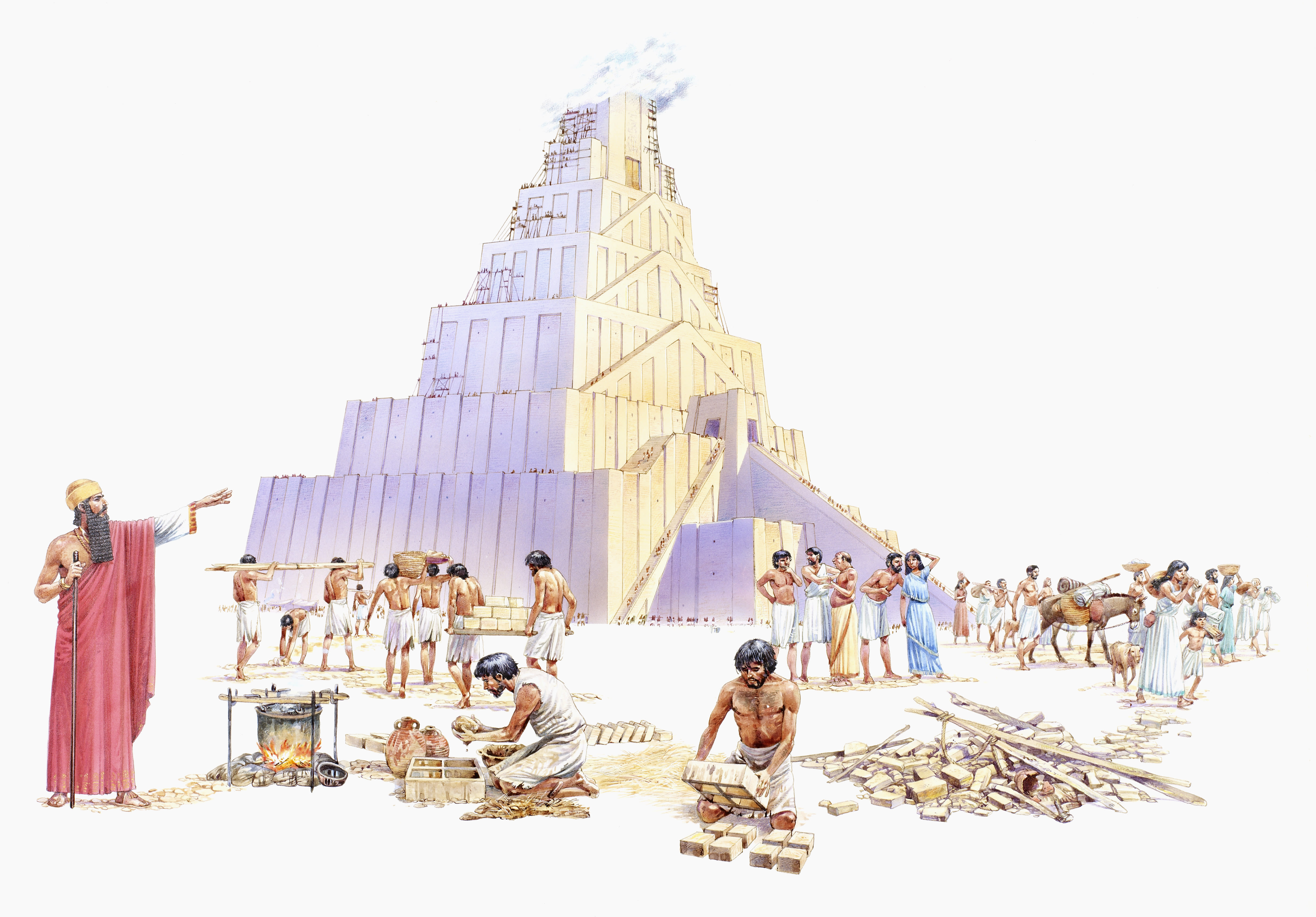
There is no complete description of the Tower of Babel available today such as what it looked like, or its height, length and width. However, we can gather some clues about its appearance from the information the Bible provides.
First, it was probably a very massive structure at its base, since the tower’s top was supposed to reach to the heavens. We don’t know how tall the structure was before God intervened, but humans must have been able to see it from miles away.
The brick used to build the tower may have been white or a chalky clay color, based on the word lebenah which translates as brick. The material used to cement or bind the bricks together probably was a dark color because it was derived from bitumen which is loosely related to our modern-day asphalt.
When Was the Tower of Babel Built?
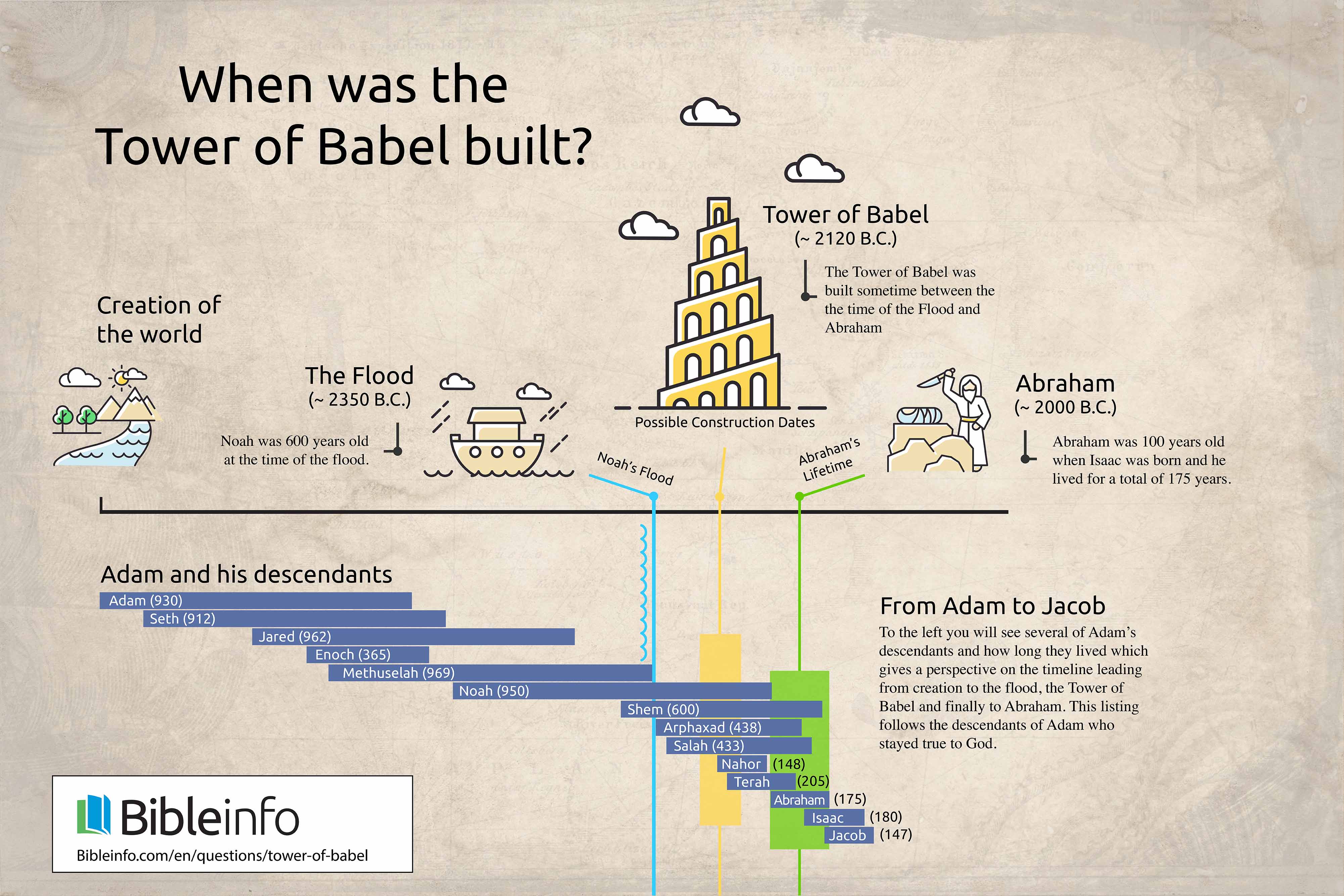

The tower was built after Noah’s flood and before the time of Abraham. The Biblical narrative of Babel in Genesis 11 follows after the genealogies of Noah and comes before the story of Abraham in Genesis chapter 12.
How Was the Tower of Babel Destroyed?
According to Genesis 11:7-8, God caused the people to stop building the Tower of Babel because He confused their language causing the people to scatter over the face of the earth.
Nothing more is said in the Bible about the Tower of Babel or its destruction. However, several early historians record the tradition that God destroyed the tower with a great wind.
¿What Does the Tower of Babel Symbolize?
The story of the Tower of Babel shows a lack of trust in God by the very human beings He created. God promised that there would never again be a flood that would cover the whole face of the earth. He even gave humans a rainbow every time it rained to remind them of His promise. However, in their self-sufficiency and stubbornness, those who did not trust God built the tower of Babel to protect themselves.
What Can We Learn From This Story?
Maybe there is something in your life that you are stubbornly persisting in and struggling to complete, even though God has already made provisions in that area. Surrender your will to God and trust Him to provide for all your needs.
Or perhaps you feel like communication is breaking down with your family, partner, coworkers or friends, and you need God’s help to bring order to the confusion. God is near. He is willing, ready and able to help in any time of need. Why not ask Him today to help you in the situations you are facing?